Subterranean termite remediation in Nashville balances structural stabilization with quiet domestic discretion across historic framing and modern concrete foundations. Middle Tennessee sits directly inside the…
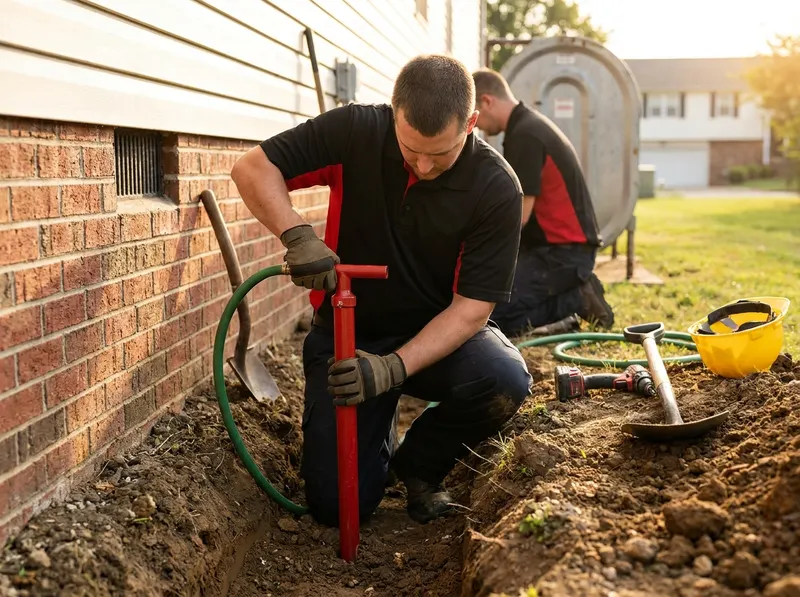
Subterranean termite remediation in Nashville balances structural stabilization with quiet domestic discretion across historic framing and modern concrete foundations. Middle Tennessee sits directly inside the high-hazard zone designated by the USDA Forest Service, where the Eastern subterranean termite nests within Davidson County clay subsoils and breaches foundations via damp earthen shelter tubes. Historic crawl spaces throughout East Nashville, Belmont-Hillsboro, and Sylvan Park frequently feature native limestone foundation stones and unsealed subfloors that sit within 18 inches of soil grade. In contrast, modern slab-on-grade developments across The Nations and Germantown face subterranean intrusion through expansion joints, plumbing rough-ins, and stucco weep screens. The regulatory baseline enforced through the Tennessee Department of Agriculture mandates precise dilution parameters for soil treatments, ensuring that subterranean termite barriers protect structural joists while avoiding reckless broadcast treatments across living areas.
Remediation protocols prioritize low-impact, highly targeted containment over aggressive broad-spectrum interior spraying. Standard installations utilize non-repellent termiticides registered by the U.S. Environmental Protection Agency, such as fipronil, which workers transfer through colony contact dynamics back to the subterranean reproductive queen. For homes adjacent to sensitive local watershed networks like the Cumberland River, the Shelby Bottoms Greenway basin, or residential catchments near Radnor Lake State Park, low-impact perimeter bait matrices registered via the National Pesticide Information Center provide an exterior interception grid that avoids soil leaching into limestone aquifers. Structural monitoring guidelines established by the National Pest Management Association confirm that termite colonies do not require volatile indoor chemical saturations; subterranean colonies must maintain direct ground contact to survive, meaning perimeter and subterranean interception halts activity permanently without disrupting indoor pet habitats.
Property owners evaluating remediation options encounter a deliberate balance between perimeter liquid soil saturation and exterior monitoring stations. Liquid soil trenching forms a continuous non-repellent barrier along structural footings, making it appropriate for older residences in Green Hills or Inglewood featuring structural sill plates set near the exterior finish grade. The operational trade-off of a perimeter trench involves concrete drilling across attached patios, carports, and walkways to reach hidden sub-slab soil. Conversely, standalone subterranean baiting stations require zero masonry alteration, relying instead on cellulose monitoring stations placed at 10-foot intervals according to protocols recognized by the University of Kentucky Department of Entomology. While bait matrices eliminate colonies by disrupting natural chitin synthesis as documented by the Entomological Society of America, they operate over an extended 60-to-120-day remediation cycle, whereas a direct liquid barrier arrests structural transit immediately upon contact.
Homeowners manage structural protection through a predictable five-stage deployment sequence that confirms termite neutralization without locked multi-year franchise contracts:
Work across steep limestone terrain in Antioch or Donelson requires adjustments for surface runoff and soil depth. The local geology often transitions into dense karst limestone within 12 inches of the surface, demanding tailored rod injection angles to prevent chemical displacement as guided by standard environmental conservation directives published by the U.S. Geological Survey. Clear quotes are provided following initial site sounding; exact project totals depend strictly on linear footage and foundation accessibility, and no work begins prior to clear on-site verification. Direct residential inquiries to (629) 319-7822.
Every job gets a firm, written price after an on-site visit.
Tell us about your subterranean termite remediation job in Nashville and we'll send a clear, written quote, usually the same day.
 CanyonWisp Pest Response