Carpenter ant structural eradication addresses infestations of Camponotus pennsylvanicus, the black carpenter ant common throughout middle Tennessee. Unlike subterranean termites that consume cellulose fiber, carpenter…
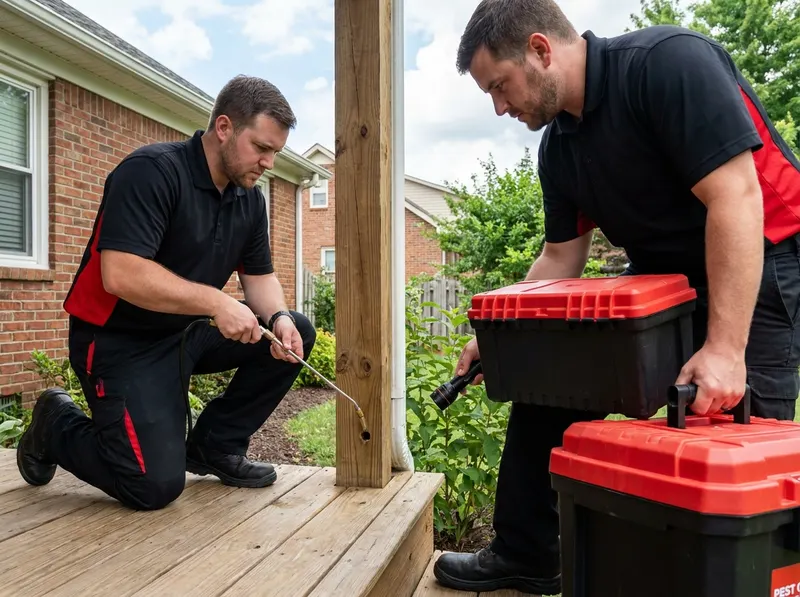
Carpenter ant structural eradication addresses infestations of Camponotus pennsylvanicus, the black carpenter ant common throughout middle Tennessee. Unlike subterranean termites that consume cellulose fiber, carpenter ants excavate smooth nesting galleries directly within moisture-damaged wall framing, roof decking, subflooring, and window headers. In older timber constructions found throughout East Nashville, Germantown, and Belmont-Hillsboro, unaddressed plumbing leaks or high roof humidity create ideal moisture thresholds for parent colonies. Untreated satellite colonies expand inward toward dry interior studs, compromising structural wood members over a multi-month period without producing exterior mud tubes. Homeowners typically identify active excavations by localized piles of coarse sawdust mixed with insect fragments, known technically as frass, appearing beneath baseboards or casing moldings.
Eradicating these colonies requires pinpointing the relationship between the exterior parent nest, often located in decaying hardwood stumps, landscape ties, or moist tree hollows near the Cumberland River basin or Radnor Lake State Park, and indoor satellite units. CanyonWisp Pest Response utilizes non-repellent micro-encapsulated formulations applied according to EPA pesticide regulations. Foraging workers cross these treated structural thresholds, unconsciously tracking active ingredients back to the queen via grooming behaviors. Indoor wall voids exhibiting acoustic activity or moisture retention measured above 18% via non-invasive moisture meters receive targeted botanical or silica micro-injections directly into the framing cavity, adhering to Clemson University Extension pest guidelines without saturating living spaces.
Selecting localized void injection over generic perimeter spraying resolves the colony at its biological root. Broad-spectrum surface sprays often fragment mature colonies, triggering defensive budding where satellite queens disperse deeper into sill plates, subfloors, and joists. In hillside homes throughout Green Hills and wooded parcels in Inglewood or Donelson, crawlspace foundations often carry ambient relative humidity levels above 70%, which sustains perimeter wood rot. CanyonWisp Pest Response inspects crawlspace joist junctions and rim boards under structural standards outlined by the Tennessee Department of Agriculture Regulatory Services, applying long-term borate mineral preservatives that render vulnerable timber permanently unpalatable to wood-destroying organisms. The following chronological process details the on-site structural remediation protocol:
Treatments conform to safety guidelines established by the National Institute for Occupational Safety and Health and application protocols defined by the National Pesticide Information Center. Outside moisture mitigation is guided by the USDA Forest Service research on timber decay and the International Association of Certified Home Inspectors wood damage thresholds. Structural evaluations also incorporate reference data from the University of Kentucky Department of Entomology, structural pest criteria from PestWorld, and safe environmental disposal practices guided by the Metro Nashville Water Services. CanyonWisp Pest Response performs these applications without lock-in annual franchise contracts. Call (629) 319-7822 to arrange a physical assessment.
Every job gets a firm, written price after an on-site visit.
Tell us about your carpenter ant structural eradication job in Nashville and we'll send a clear, written quote, usually the same day.
 CanyonWisp Pest Response