 CanyonWisp Pest Response
Brown Recluse Spider Remediation Nashville
Residential structures throughout Davidson County face high endemic populations of the brown recluse spider ( University of Kentucky Entomology ). Unlike hunting species that traverse open living rooms, Loxosceles…
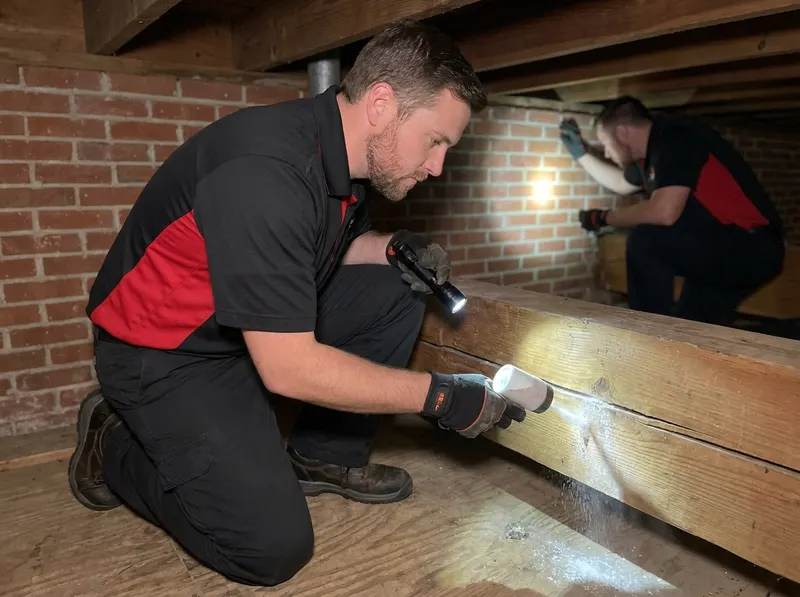
- Protocol scope: Comprehensive inspection, thermal void scans, glue board placement grids, micro-fissure sealing, and localized target dusting.
- Deployment speed: On-site residential inspections across Davidson County within 24 to 48 business hours.
- Pricing baseline: Remediation plans begin at a $200 minimum assessment and spot-treatment threshold, with full attic and crawl space protocols averaging $450 to $1,200.
- Treated micro-habitats: Attics, crawl spaces, interior wall voids, subflooring, baseboard chases, behind kitchen cabinetry, and storage closets.
- Direct contact: Call (629) 319-7822 or submit floor plan details for service scheduling.
Residential structures throughout Davidson County face high endemic populations of the brown recluse spider (University of Kentucky Entomology). Unlike hunting species that traverse open living rooms, Loxosceles reclusa establishes deep harborages inside insulated floor joists, cardboard storage cartons, and drop-ceiling cavities. In older historical homes in East Nashville and Belmont-Hillsboro, structural framing gaps and tongue-and-groove lath provide uninterrupted transit corridors between structural voids and living quarters. Standard baseboard pesticide sprays fail because the brown recluse walks with its tarsi elevated, minimizing surface contact with repellent pyrethroids. Remediation requires precision delivery of desiccant dusts, such as amorphous silica gel (EPA Pesticide Programs), directly into dry attic trusses and dead air cavities where spiders shelter during daylight hours.
Remediation protocols balance immediate knockdown against persistent void containment. Homeowners in Green Hills and Sylvan Park often uncover infestations inside finished basements or dry-walled storage areas adjacent to limestone foundations. CanyonWisp Pest Response prioritizes low-impact mechanical and chemical integration rather than broad-spectrum residential saturation. Technicians deploy calibrated insect monitoring boards based on distribution benchmarks from the Entomological Society of America to isolate nesting density before applying any active formulations. Exterior perimeters receive non-repellent barrier applications using formulations compliant with the Tennessee Department of Agriculture regulatory standards, preventing foraging spiders from entering through weep screeds, crawl space vents, and brick interfaces along properties near Shelby Bottoms Greenway and Radnor Lake State Park.
- Step 1 involves an initial multi-point structural assessment of all dark, undisturbed storage sectors, identifying harborage zones and counting baseline specimens on calibrated sticky monitors.
- Step 2 utilizes micro-injection equipment to deliver inorganic borate and silica desiccant dusts into structural voids, wall switch boxes, and floor header joints without contaminating living-space air volumes.
- Step 3 applies a targeted, non-repellent microencapsulated compound to exterior sill plates, foundation joints, and perimeter entry thresholds to interrupt exterior migration pathways.
- Step 4 seals exterior structural penetrations, plumbing chases, and access hatches to establish physical barrier containment.
- Step 5 deploys a secondary network of directional monitors across interior baseboards, re-evaluated after 30 days to measure population attrition and confirm void suppression.
Selecting localized void remediation instead of broadcast whole-house spraying prevents chemical exposure risks for household pets and infants while delivering complete population collapse. Broad-spectrum sprays frequently cause brown recluse spiders to scatter into bedding and clothing rather than perishing. Homeowners in Germantown, Donelson, Antioch, and The Nations benefit from focused structural interventions that target nesting niches directly. Attic insulation materials such as loose-fill cellulose or fiberglass batts dictate whether mechanical removal, thermal spot treatments, or high-volume electro-dusting is required, with exact treatment specifications confirmed on-site prior to service deployment.
How much does Brown Recluse Spider Remediation cost in Nashville?
Every job gets a firm, written price after an on-site visit.
Common questions
Why are brown recluse spiders so prevalent in Nashville homes?
Are the chemicals used for brown recluse spider remediation in Nashville safe for indoor pets?
Does brown recluse remediation in Nashville require an ongoing monthly contract?
How long does a brown recluse spider remediation treatment take in a Davidson County residence?
How do I schedule an inspection for brown recluse remediation in Nashville?
Get started today
Tell us about your brown recluse spider remediation job in Nashville and we'll send a clear, written quote, usually the same day.